

I Watched Teams Waste Months on Rework. Then I Discovered Prototype-Driven Discovery.
I watched an engineering team spend two weeks building a feature. Clean code. Well-tested. Shipped on time.
Then I watched the PM realize the core user flow didn’t work. The mockups looked perfect. The prototype (built in production code) proved they’d designed the wrong thing.
Two weeks of engineering effort. Gone. Because discovery happened too late.
After three months of presenting to product teams, I can predict the problem within five minutes:
“We spend 6 weeks on discovery and design. Engineering starts building. Week 3, we realize the flows don’t work. Back to the drawing board.”
The pain point isn’t slow engineering. It’s slow discovery—and discovering problems only after engineering has already started.
This is exactly what Melissa Perri describes as the “build trap” in her work on product thinking—teams optimizing for output (features shipped) instead of outcomes (problems solved). Fast prototyping lets you discover outcomes before committing engineering resources.
Here’s what changed for the teams that solved this:
They stopped using engineering cycles to discover what doesn’t work. Instead, they compressed 6 weeks of iteration and alignment down to 1 week—using AI to generate working prototypes in hours, not weeks. They validate with stakeholders before a single line of production code gets written.
This article breaks down the three stages of AI-enabled discovery (Crawl → Walk → Run), shows you the exact workflow that compresses discovery while avoiding wasted engineering effort, and previews the Agentic AI PM Co-Pilot I’m building to automate the entire workflow.
Don’t Wait for Engineering to Adopt AI—Start with Discovery
Before we go further, let’s address the most common blocker I hear from PMs.
“We’re exploring AI for our engineering workflows, but there’s change management, prerequisites, codebase architecture changes. It’ll take months.”
Here’s what most PMs miss: You don’t need to wait.
While AI-enabled engineering has prerequisites (tooling, infrastructure, team buy-in), AI-enabled discovery doesn’t. You can start prototyping today. No engineering involvement needed.
The opportunity: Compress discovery and planning independently. Validate ideas with working prototypes before engineering starts. Then hand off to whatever system they’re using—Jira, Linear, traditional workflows.
Both can improve in parallel. But as a PM, you’re not blocked. You can improve discovery immediately while engineering figures out their AI adoption path.
Context: This aligns with what Marty Cagan and Chris Jones wrote at SVPG about the importance of continuous discovery—except now AI enables you to compress weeks of iteration into days through instant prototyping.
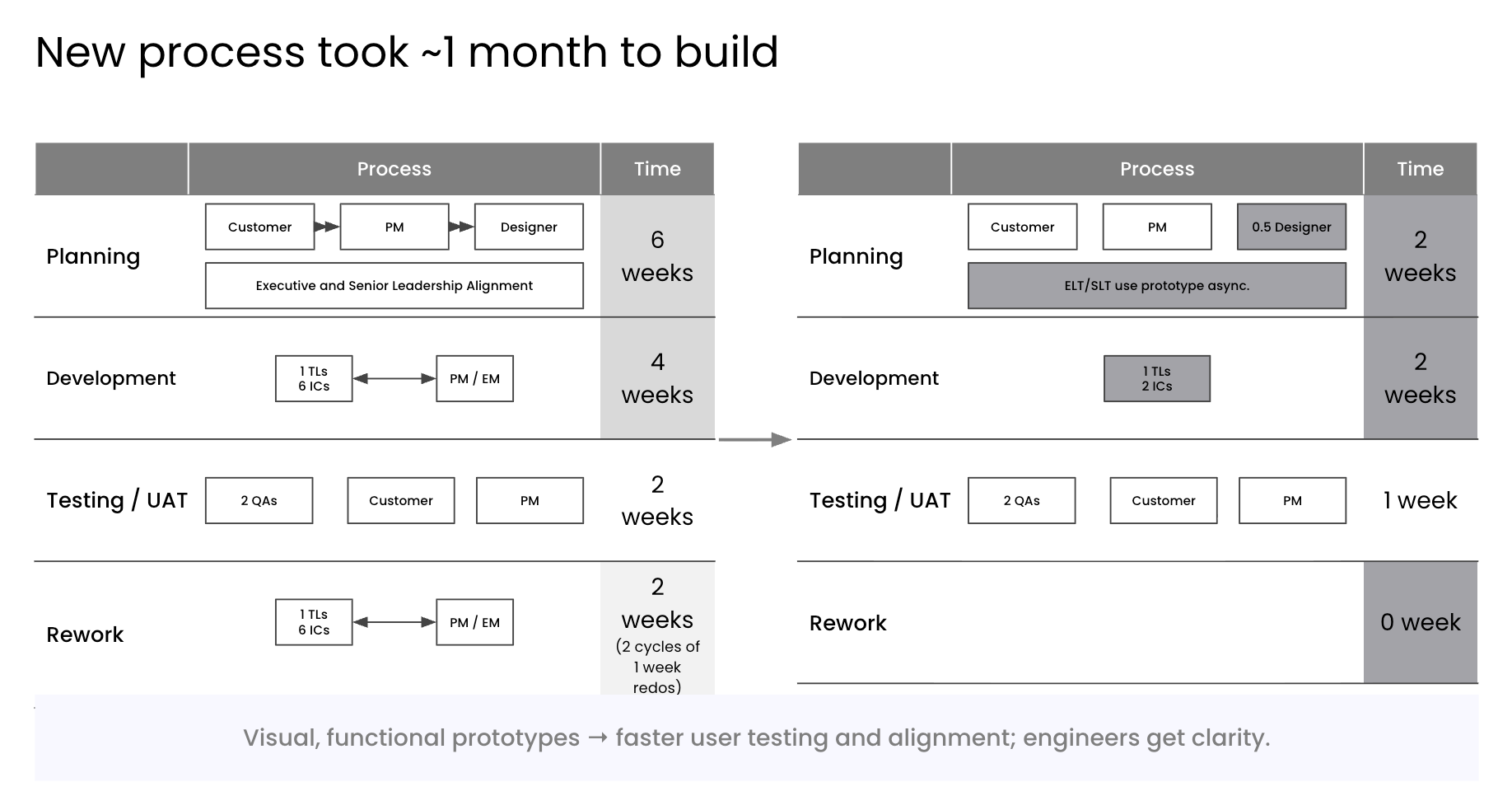
Old model (iterative but slow—discovery happens too late):
Week 1-3: PM writes PRD, Designer creates mockups, Alignment meetings
Week 4: Engineering starts building iteratively
Week 5: First working version → PM realizes flow doesn’t work
Week 6-7: Back-and-forth on fixes (latency in communication)
Week 8: Ship something → User feedback confirms original concerns
Week 9-10: Engineering backlog fills with fixes, but too slow to iterate
Problem: Discover issues after production code is written. Communication overhead and engineering backlog make fixes expensive and slow. Design decisions hardcoded in ways that are hard to fix.
New model (compress discovery, iterate before engineering):
Day 1: PM conversation → AI generates working prototype
Day 2-3: Stakeholders interact with functional software (discover flow issues immediately)
Day 4-5: Iterate on prototype (fast, no engineering backlog)
Week 2: Validated prototype + detailed spec → Hand off to engineering
Engineering builds what’s already been validated with users
Launch → Feedback is refinement, not “we built the wrong thing”
Breakthrough: Discover and fix issues when iteration is cheap (prototype stage), not expensive (production code stage)
We’re not optimizing the SDLC. We’re using AI to compress discovery so we catch problems before they’re hard to fix.
The Three Stages: Crawl, Walk, Run
After talking to 30+ product teams experimenting with AI, I’ve mapped three distinct maturity stages. Most teams are stuck at Crawl or early Walk.
This framework builds on GitHub’s research on AI-assisted development which found that developers using AI copilots see biggest gains not from code generation alone, but from combining multiple AI workflows. The same applies to product development.
Stage 1: Crawl - Copy/Paste AI
What it looks like:
PM opens ChatGPT, asks for PRD outline
Copies output into Google Doc
Asks for JIRA ticket format
Copies output into JIRA
Repeats for every artifact
Discovery compression: Minimal (maybe 1-2 days saved on writing) Limitation: Human is the integration layer, still no prototype
The bottleneck: You’re still doing all the translation work. AI generates text, but YOU copy/paste between tools, YOU format for each system, YOU maintain consistency.
Critically: You still don’t have a working prototype. Engineers still start blind.
Every PM I talk to is doing this. It’s better than nothing, but it doesn’t compress discovery.
Stage 2: Walk - AI-Generated Artifacts → Tool Import
What it looks like:
PM uses LLMs to create prompts that generate tool-specific output
ChatGPT generates PRD → exports to Google Docs
ChatGPT generates designs → imports to Magic Patterns
AI generates working prototype → deploys on Replit
AI generates JIRA tickets → bulk imports to JIRA
Discovery compression: 6 weeks → 1 week Limitation: Still manual handoffs between AI and tools
The breakthrough: You’re no longer formatting manually. AI knows each tool’s format and generates ready-to-import artifacts.
But more importantly: You now have a working prototype in hours, not weeks.
This addresses what Julie Zhuo calls the “build trap”—building things before validating them. With AI prototyping, validation comes first, building comes second.
Example workflow:
ChatGPT generates PRD from conversation
Magic Patterns creates design variants from PRD
Replit builds functional prototype in 2 hours
Stakeholders interact with working software
Iterate on prototype until it’s right
THEN hand off to engineering with working prototype + detailed spec
This is where Turing was: Compress discovery before engineering starts. Engineers receive working prototype + JIRA tickets, build what customers actually want.
Key advantage: Works with your existing systems. You don’t need AI-native code infrastructure. Keep using Jira, Linear, GitHub—whatever you have today. The prototype validates the direction, then your existing engineering workflow takes over.
But they still had humans triggering each step between tools.
Stage 3: Run - Agentic AI PM Co-Pilot
What it looks like:
PM has conversation with AI agent
Agent automatically:
Generates requirements
Creates design variants
Builds prototype
Iterates based on feedback
Generates production-ready JIRA tickets
Updates documentation as prototype evolves
Manages handoff to engineering
Discovery compression: 6 weeks → 1 week (fully automated) Breakthrough: Agent manages the entire discovery-to-handoff workflow
This is what I’m building.
The Agentic AI PM Co-Pilot doesn’t just generate artifacts. It orchestrates the entire discovery flow from idea to working prototype to production handoff, handling all the tool integrations, maintaining consistency, and learning from feedback loops.
Prerequisites: Unlike Walk stage, Run stage eventually enables AI-native code development—but that requires specific codebase architecture and infrastructure. Most teams aren’t ready for that yet.
For now: Walk stage is the sweet spot. Accessible to any team, works with existing systems, delivers immediate discovery compression.
The Turing Case Study: How Walk Stage Compresses Discovery & Avoids Waste
I led this transformation at Turing, working directly with the product and engineering teams to implement AI-enabled discovery.
The breakthrough came when we shifted from discovering problems during engineering sprints to discovering them in prototypes—when fixing them takes hours, not weeks.
One of my designers captured it perfectly: “Having the PM just show me the prototype he built saved two weeks of back-and-forth. I understood the problem immediately and could jump straight to production-ready design.”
Here’s the specific workflow we implemented:
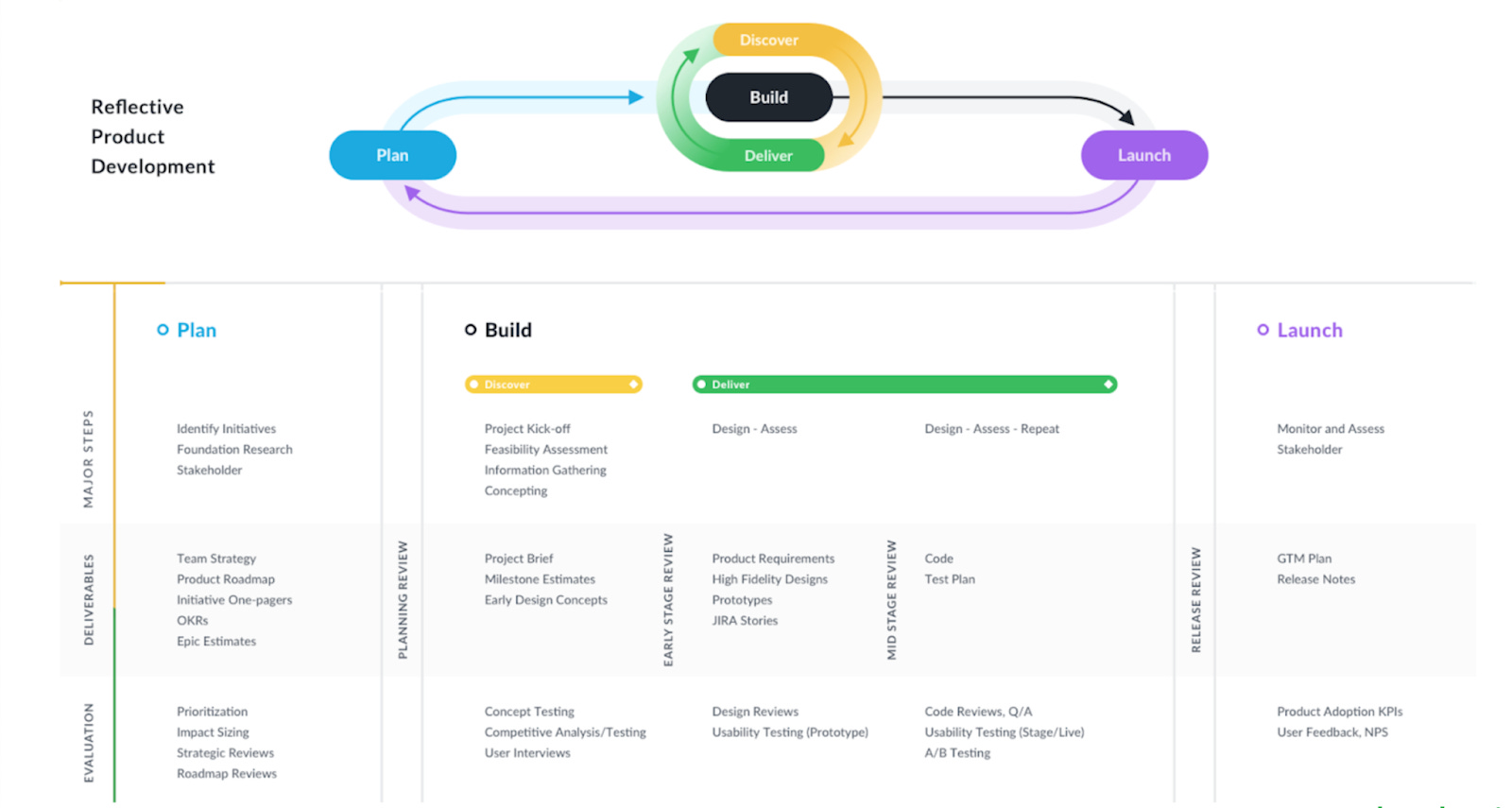
The Problem (Traditional Process):
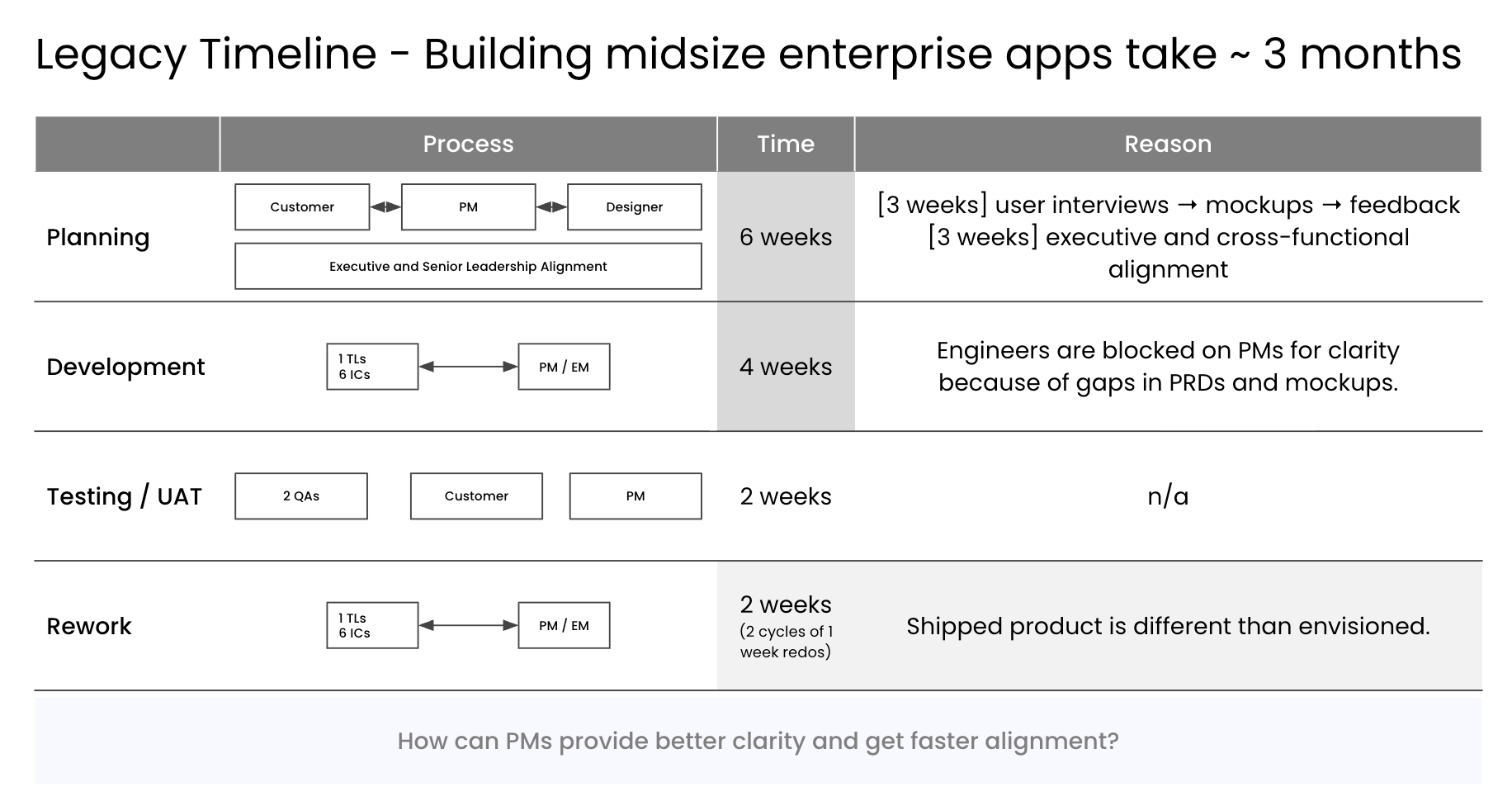
Discovery & Planning - 6 weeks:
User interviews → mockups → feedback cycles
Back-and-forth on what to build
Alignment meetings on static mockups
No working prototype to validate ideas
Development Phase - 4 weeks:
Engineers start building from PRD + static mockups
Discover gaps, ask clarifying questions
Build something, realize it doesn’t work
Rework cycles consume time
Testing/UAT - 2 weeks:
QA finds issues with core flows
“This isn’t what we meant”
Rework - 2 weeks:
2 cycles of rebuilding
Weeks of engineering effort wasted
Shipped product different than envisioned
Total: 14 weeks (6 weeks wasted on rework and misalignment)
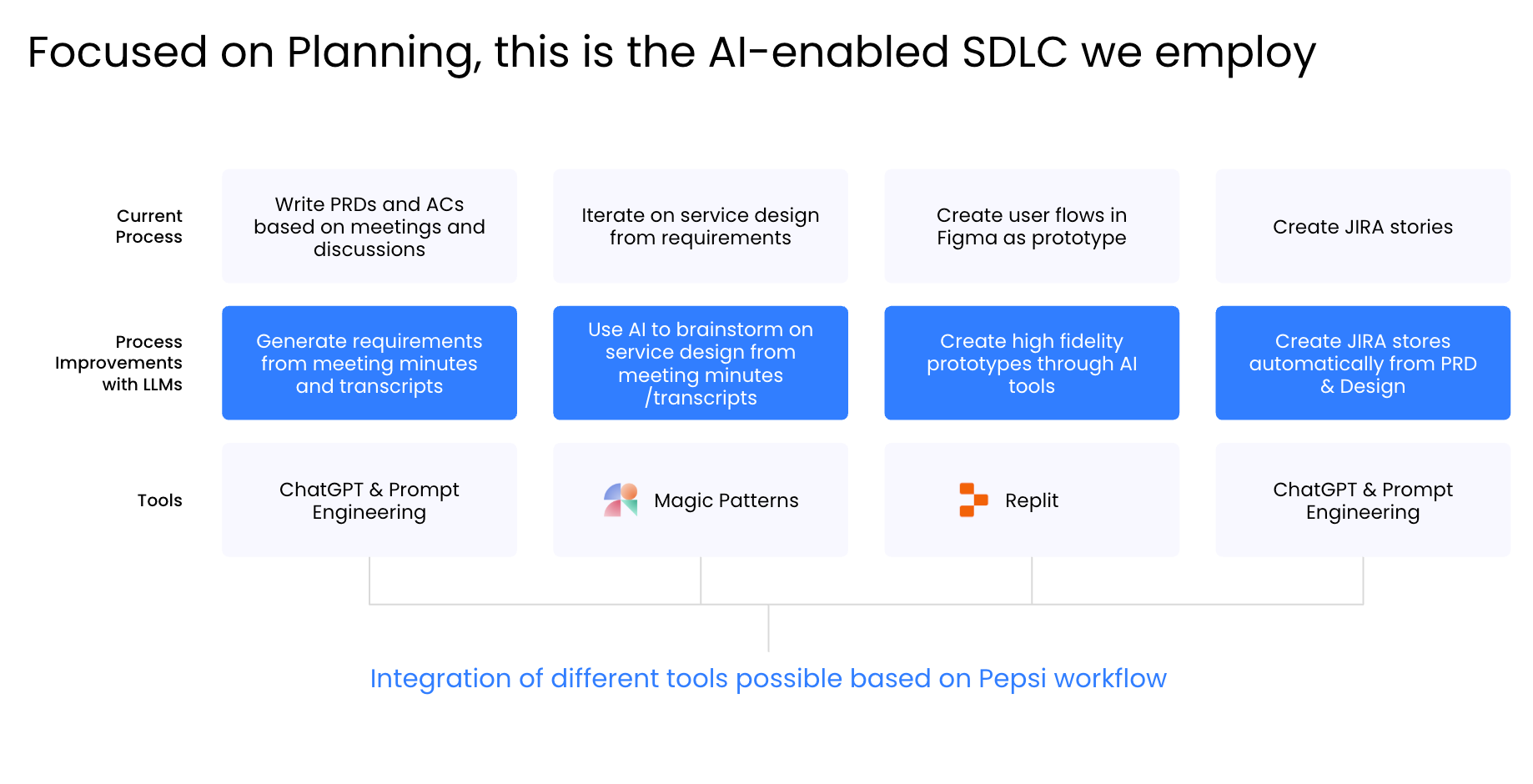
The AI-Enabled Solution (Walk Stage):
They implemented a 5-step workflow that compresses discovery and validates BEFORE engineering starts:
Step 1: Voice & Transcript
Meeting transcripts captured automatically
AI extracts key decisions and requirements
No more manual note-taking
Step 2: AI PRD Generation
ChatGPT synthesizes insights into structured PRD
30 minutes vs weeks of writing
PM guides and edits, doesn’t write from scratch
Step 3: Design Variant Generation
Magic Patterns creates 3-5 UI approaches from PRD
Stakeholders see options immediately
Designer refines selected variant
Step 4: Functional Prototype (The Game-Changer)
Replit builds working prototype in 2 hours
Not static mockups—clickable, functional UI
Stakeholders interact with real software
Discover what works/doesn’t work BEFORE engineering
Iterate on prototype until it’s right
Step 5: Production Handoff
AI generates detailed JIRA tickets from validated prototype
Engineers receive working prototype + detailed spec
They build what’s already been validated with customers
The Results:
Discovery & Validation - 1 week:
Prototype generated in hours, not weeks
Stakeholder alignment on working software
Iterate until validated
Compress 6 weeks → 1 week
Development Phase - Faster & Cleaner:
Engineers build from validated prototype
No “wait, this doesn’t work” surprises
No rework cycles from misalignment
Build the right thing, first time
The breakthrough: Engineering effort focused on production implementation, not discovering what doesn’t work.
Why PRDs Aren’t Dead (But Reading Them Is)
Here’s the counter-intuitive insight from Turing: They’re writing MORE PRDs, not fewer.
When I mentioned this to a product leader last week, she laughed. “So we still write documentation nobody reads?”
“Exactly,” I said. “Except now the AI reads it. And proves whether it’s right—in hours.”
The PRD is now fuel for AI prototype generation, not documentation for humans to read.
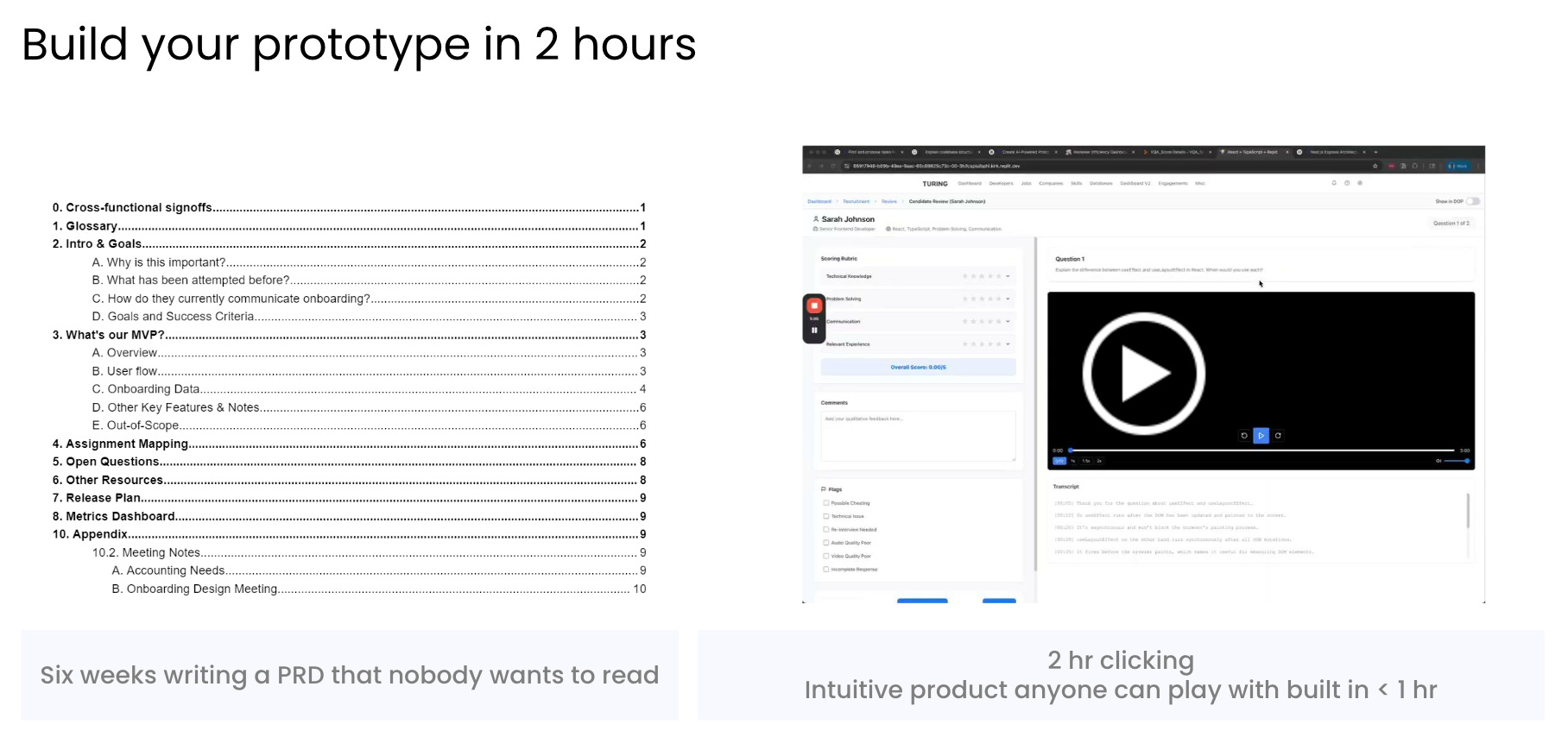
Old paradigm:
PM writes PRD for engineers to read
Engineers don’t read it (too long, outdated, no time)
Start building, discover gaps, ask questions
Weeks lost to misalignment and rework
New paradigm:
AI writes PRD from PM conversation
PRD feeds AI to generate working prototype
Prototype validates the PRD (discover gaps immediately)
Iterate on prototype until right
Engineers build from validated prototype + iterated spec
The PRD becomes the input for instant prototyping, not the artifact engineers struggle to interpret.
The bridge to production: Today, tools like Replit create functional prototypes. Engineering takes that validated prototype and detailed spec (already iterated) to build production-ready code. The gap between prototype and production is shrinking every month.
Further reading: Itamar Gilad has written extensively about the risks of AI-generated artifacts without thinking in “On GenML, Artifacts, and Product Management“—the prototype-driven approach I’m describing here addresses his concerns by using AI to enable faster validation, not replace thinking.
What I Learned Talking to 30+ Product Teams
Over the past six months, I’ve had versions of this conversation with product leaders at companies from 50 to 3000 people.
The conversation usually starts the same way. I ask: “How long does it take from idea to shipped feature?”
“About 8-10 weeks,” they say. Then they pause. “But honestly, 2-3 weeks of that is rework because we built the wrong thing.”
Here are the patterns:
The teams stuck at Crawl:
Using ChatGPT for brainstorming, but manual everything else
Still no working prototypes (engineers still start blind)
“We waste weeks building the wrong thing”
Biggest blocker: Don’t know how to get from AI text to working prototype
The teams reaching Walk:
Built prompt chains to generate prototypes
Massive time savings on discovery (weeks → days)
Still frustrated by manual handoffs between tools
But they’re avoiding wasted engineering effort
The insight everyone shares:
“We need to validate BEFORE engineering starts”
“I don’t want to waste engineering cycles on rework”
“Can’t the AI just manage the whole discovery workflow?”
That’s why I’m building the Agentic AI PM Co-Pilot—to fully automate discovery-to-handoff.
The 5 AI Tools in the Turing Stack (Walk Stage)
If you want to compress discovery and avoid wasted engineering effort today, here’s the exact stack:
1. ChatGPT-4 (Requirements Layer)
Custom GPTs for PRD generation from conversations
Prompt: “Generate a PRD from these meeting notes in [your company’s format]”
Pro tip: Ask ChatGPT to write better prompts for you
2. Magic Patterns (Design Layer)
Input: PRD or text description
Output: 3-5 UI variants with different approaches
Designers refine, don’t create from scratch
Fast iteration on design before prototype
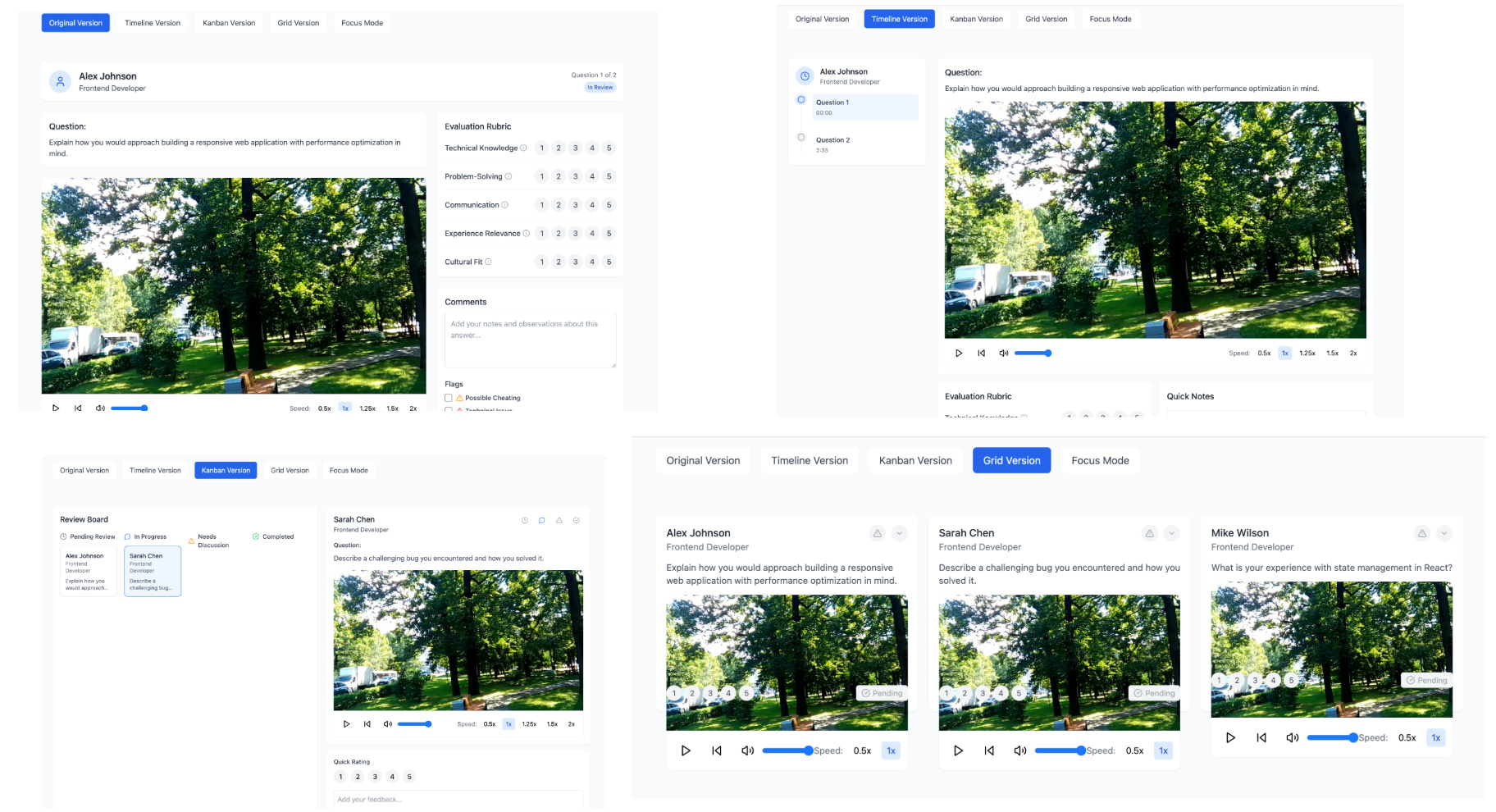
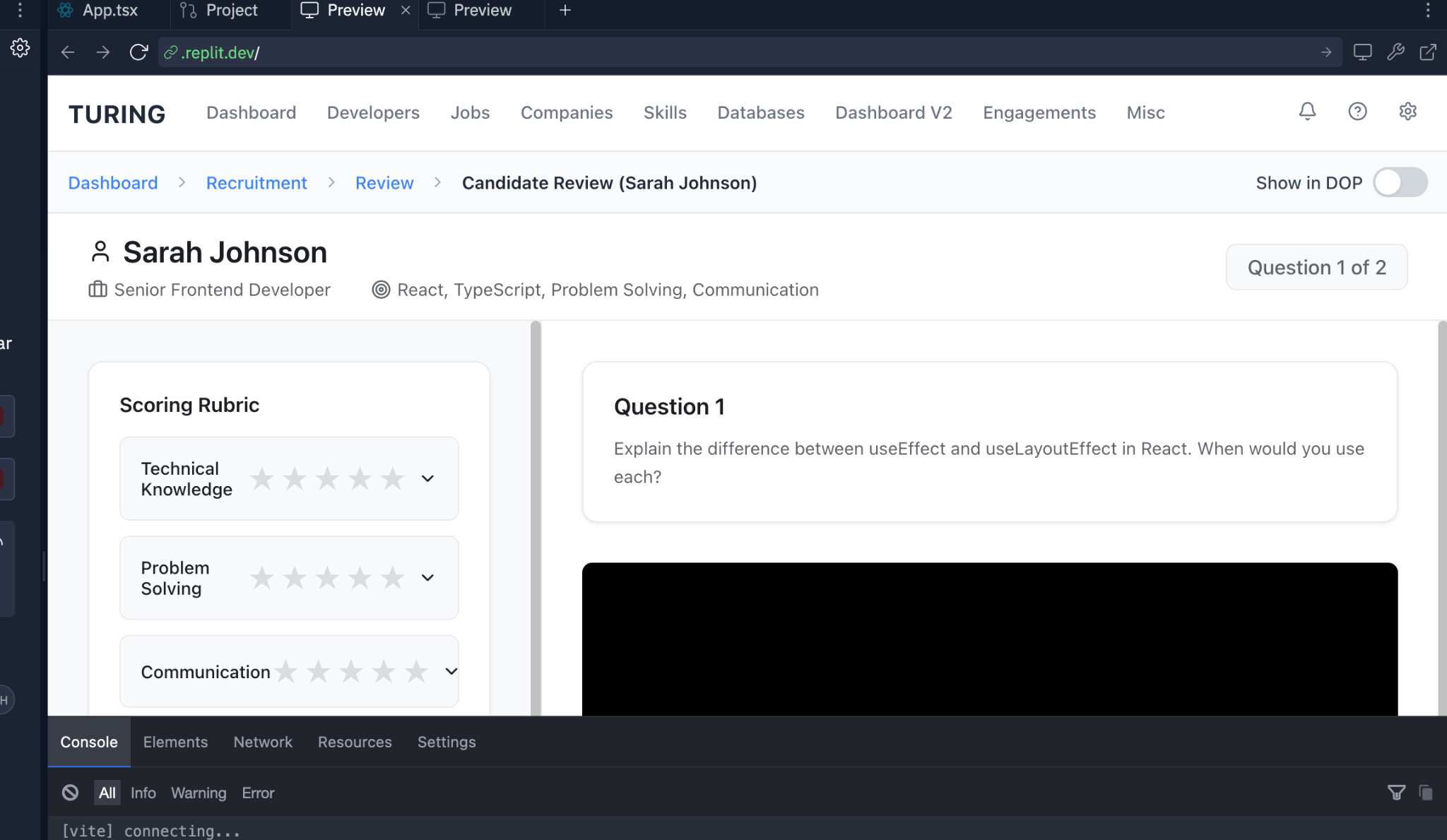
3. Replit (Prototype Layer - THE KEY)
Input: PRD + selected design variant
Output: Functional prototype with working UI in 2 hours
This is where discovery compression happens
Stakeholders interact with real software
Iterate until validated
Read more: Teresa Torres has written extensively about continuous discovery habits—Replit makes her weekly customer touchpoints possible by giving you working prototypes to test, not static wireframes
4. JIRA (Production Handoff Layer)
ChatGPT generates tickets from validated prototype:
User story format
Acceptance criteria
Story point estimates
Dependencies
Engineers receive clear spec + working reference
No more “wait, what did you mean?” cycles
5. Google Docs (Documentation Layer)
ChatGPT generates spec in Docs format
Updates as prototype evolves
Engineers can reference if needed (but prototype is truth)
The missing piece: These tools don’t talk to each other. YOU manually trigger each step and copy between tools.
That’s the Walk→Run gap. That’s what the Agentic AI PM Co-Pilot automates.
Preview: The Agentic AI PM Co-Pilot (Run Stage)
I’m building this because I’m tired of being the integration layer—and because discovery compression is the unlock for avoiding wasted engineering effort.
The vision:
You say: “I need a prototype for a user interview scoring system.”
The agent:
Asks clarifying questions (async, via voice or text)
Generates structured requirements (pulls from your past work for context)
Creates 3 design variants (using your company’s design system)
Builds functional prototype (deployed URL you can share immediately)
Manages iteration cycles (stakeholder feedback → updated prototype)
Generates production-ready JIRA tickets (from validated prototype)
Manages handoff to engineering (working prototype + detailed spec)
You review at each stage. The agent does the execution.
The breakthrough: Full discovery-to-handoff automation with context memory.
The agent knows:
Your company’s PRD format
Your design system
Your JIRA/Linear workflow
Your stakeholder preferences
What worked last time
It’s not just generating artifacts. It’s compressing discovery from weeks to days while ensuring engineers build the right thing.
Target: Same 6-week → 1-week discovery compression as Turing, but fully automated.
The 4-Week Adoption Playbook
Want to compress discovery and avoid wasted engineering effort? Here’s the path from Crawl to Walk in 30 days.
No infrastructure changes needed. Keep your existing Jira, Linear, GitHub workflows. This works no matter what stage you’re at.
Week 1: Start with Prototype Generation
Focus: Get from idea to working prototype
Tool: ChatGPT (PRD) → Replit (prototype)
Pick ONE simple feature to prototype
Goal: See working UI in hours, not weeks
Why this matters: As Gibson Biddle writes, the best product strategy is one you can test quickly—prototyping is how you test strategy, not just features
Week 2: Add Design Iteration
Add: Magic Patterns for design variants
Workflow: Idea → PRD → 3 design options → prototype
Test with real stakeholder feedback
Goal: Validate design before engineering
Week 3: Add Production Handoff
Add: JIRA ticket generation from validated prototype
Workflow ends with: working prototype + detailed tickets
Hand off to engineering team
Goal: Engineers build from validated prototype
Week 4: Measure Discovery Compression
Track: How long did discovery take? (should be days, not weeks)
Track: How many engineering rework cycles? (should be near zero)
Document what worked
Goal: Prove discovery compression to leadership
Month 2: Expand to More Features
Apply workflow to 3-5 more features
Build team muscle memory
Refine prompt chains
Months 3-6: Reach Walk Stage
Discovery compressed for most features
Engineering building right things first time
Team fluent with prompt chains
Month 7+: Prepare for Run Stage
Document remaining manual steps
Ready for Agentic AI PM Co-Pilot when available
The Future: From SaaS to Bespoke AI-Generated Software
Here’s the paradigm shift Turing helped me see:
The SaaS era (2010-2023):
Standardized solutions
Configure existing software
Vendor lock-in
Change requests take quarters
The AI era (2024+):
Bespoke software generated on-demand
Software evolves with your business in real-time
AI generates new features in hours
The product IS the prototype
We’re moving from “configure SaaS” to “generate bespoke software.”
PMs who master this become 4x force multipliers. The ones who don’t become bottlenecks.
Important caveat: Itamar Gilad warns in “What Does Generative AI Mean For Product Development?“ about the risk of AI accelerating feature factories—producing more junk features faster. The antidote: use AI for discovery compression (validate ideas faster), not just execution acceleration (ship more features).
Your Next Move
The teams compressing discovery aren’t waiting for perfect tools. They’re building working prototypes TODAY with ChatGPT + Replit.
The teams wasting engineering effort are still writing docs and hoping for the best.
Don’t be the second group.
Here’s what to do Monday morning:
Pick ONE feature you’re about to build
Open ChatGPT → Generate PRD
Open Replit → Build working prototype from PRD
Share with stakeholders → Get feedback on working software
Iterate until validated → THEN hand off to engineering
If you compress discovery on that ONE feature, do it again for the next.
Do this 5-7 times, and you’re at Walk stage.
That’s where discovery compression happens. That’s where you avoid wasted engineering effort.
And if you want to skip straight to Run stage?
I’m building the Agentic AI PM Co-Pilot to fully automate discovery-to-handoff. It’s not ready yet, but it will be.
In the meantime, start walking. The teams that master prototype-driven discovery today will be the first to adopt full agentic workflows.
The question isn’t whether AI will transform product development. The question is whether you’ll compress discovery now—or keep wasting engineering cycles.
What’s the biggest source of wasted engineering effort on your team? Building the wrong thing? Rework from unclear specs? Misalignment discovered too late? Hit reply and tell me—I’m mapping the most common pain points for the agent roadmap.
Sam, this was a well-written article! Good read!